02 / projects

Engineering Projects

Team leadership and independent builds outside the classroom.

Project Aquila RPU-1 "Reliant" Stardust RPI Design/Build/Fly Invariant Manifolds
RXπ — RPI Experimental Propulsion Initiative

Project Aquila - Advanced Liquid Flight Vehicle and Regenerative Cooling

Chief Engineer and Propulsion Lead

Leading a dedicated team of 60 students to build Altair, a 1600 lbf liquid regen engine additively manufactured out of Al10SiMg alloy, and its flight vehicle Albatross, a 300lb liquid Nitrous Oxide / Alcohol rocket expected to launch in May 2027.

Helped create a work breakdown structure that places student experience first by assigning a component responsibility to each member, giving them the opportunity to bring their part from conception to flight and learn the entire design process.

Wrote a coupled combustion/CEA, multiphase flow, and regenerative cooling solver from the ground up in Python to optimize flight vehicle design.

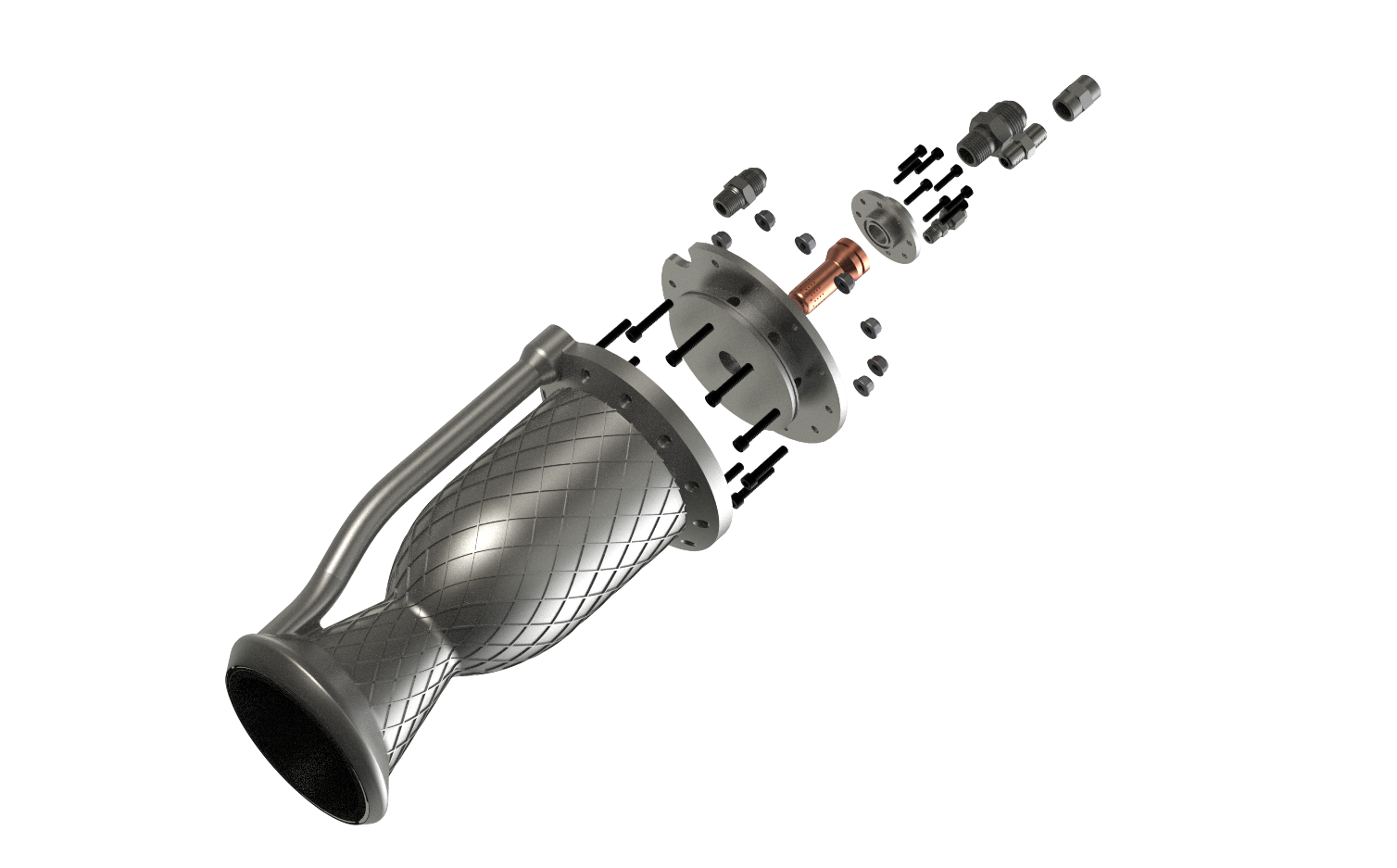
Personally designed the Altair additive thrust chamber and taught regenerative cooling, pintle injector optimization, and finite element analysis to students on the Propulsion team.
Approaching CDR and Fabrication. Vehicle Simulations
Rpu2 exploded view
RPU-2 'Altair' Exploded View
RXπ — RPI Experimental Propulsion Initiative

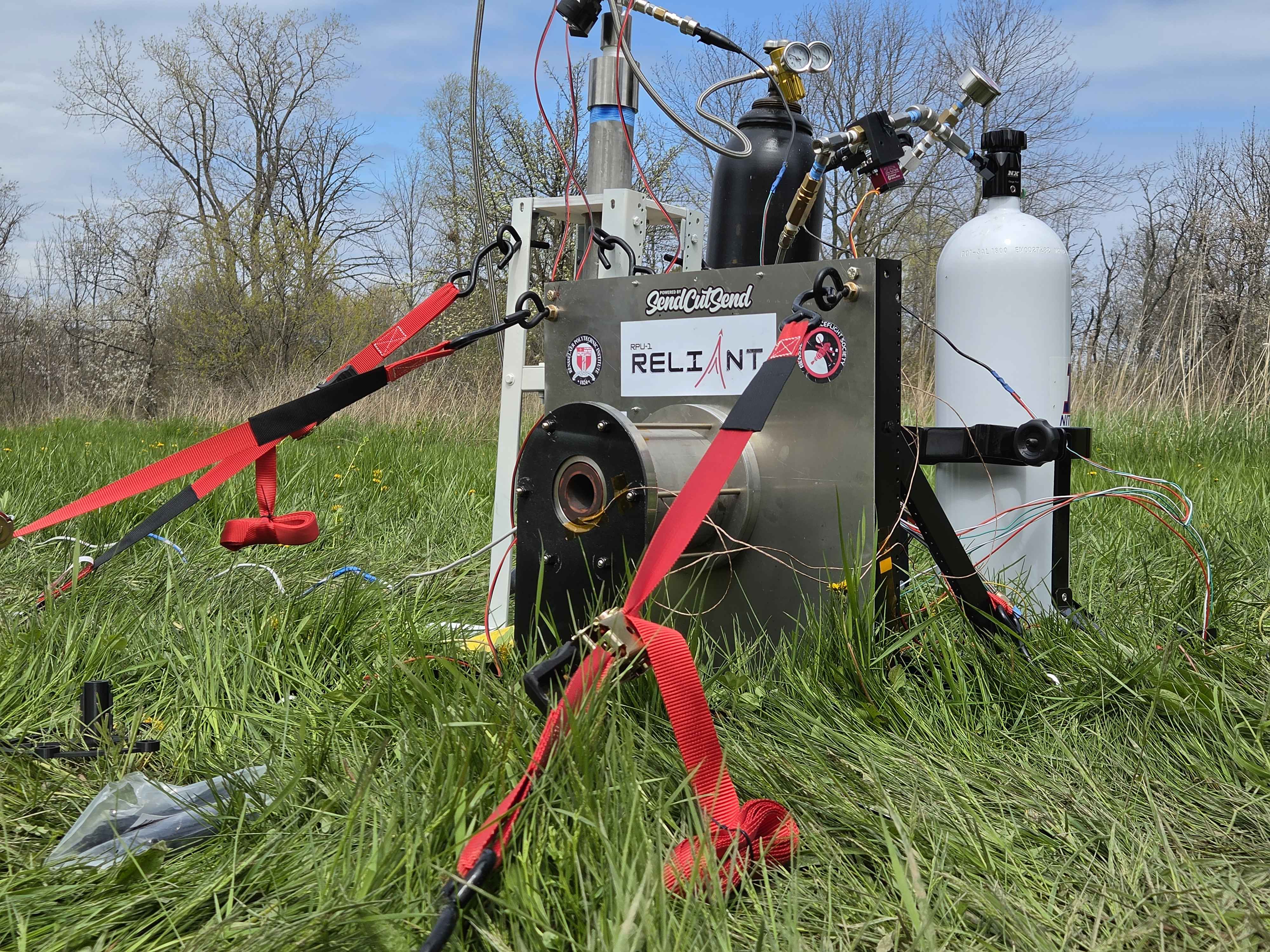
RPU-1 "Reliant": RPI's First Liquid Rocket

Chief Engineer

Led the engine and feed system design for a brand-new team building RPI's first liquid rocket engine, with no institutional playbook to build from. Most of what the team knows now was earned the hard way over the course of design and fabrication.

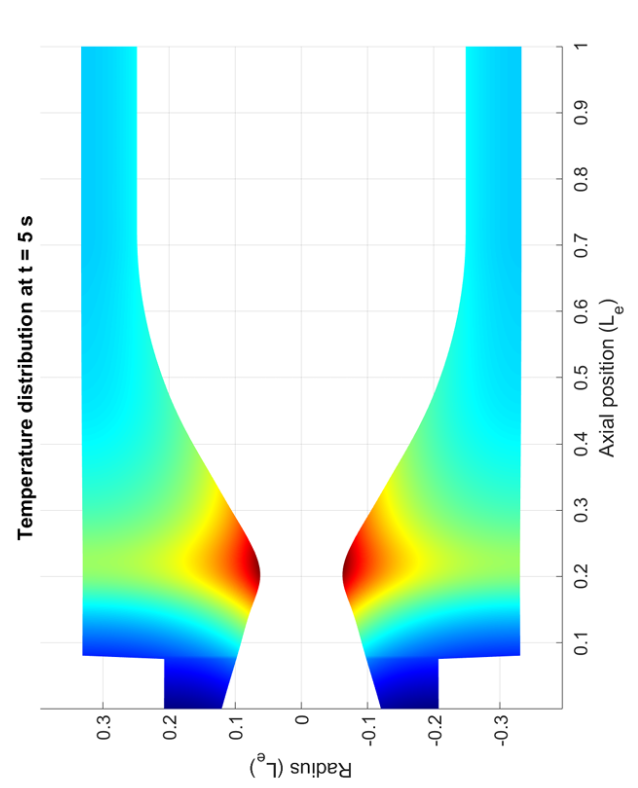
Wrote a custom Python implementation of the Non-Homogeneous Non-Equilibrium (NHNE) model to predict multiphase nitrous oxide flow through the injector, and a MATLAB 2D heat-transfer solver to propagate inner wall temperature over burn time.

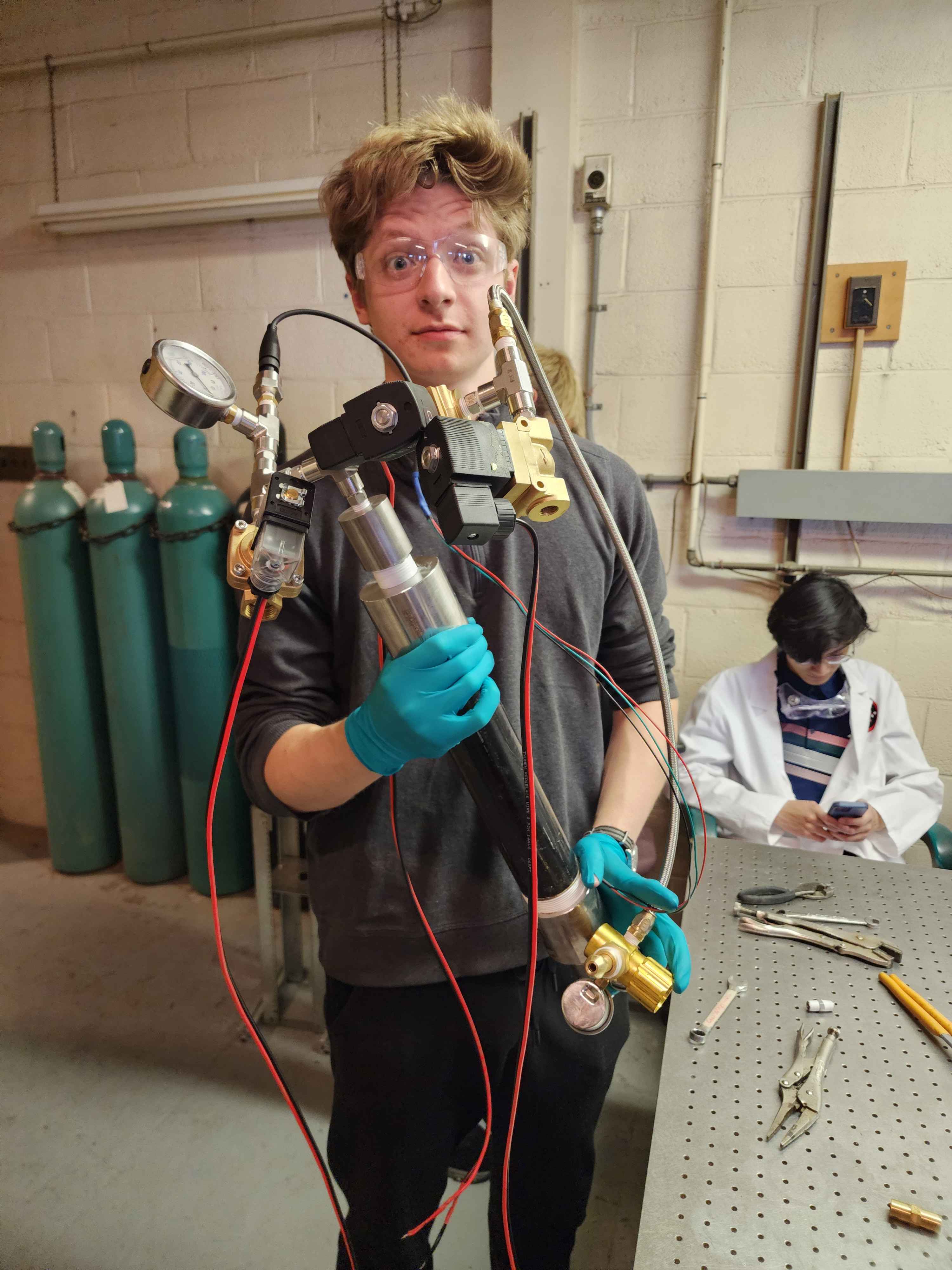
Attempted static fire in Spring 2026. Had to abort due to a malfunctioning solenoid valve on the GN2 pressurization line. The team is running tests to identify cause of valve failure and get RPU-1 back to the test site.
rpu1 lab pic
RPU-1 Thrust Chamber Assembly
Kerosene Tank before Cold Flow Test
Kerosene Tank before installation during cold flow testing
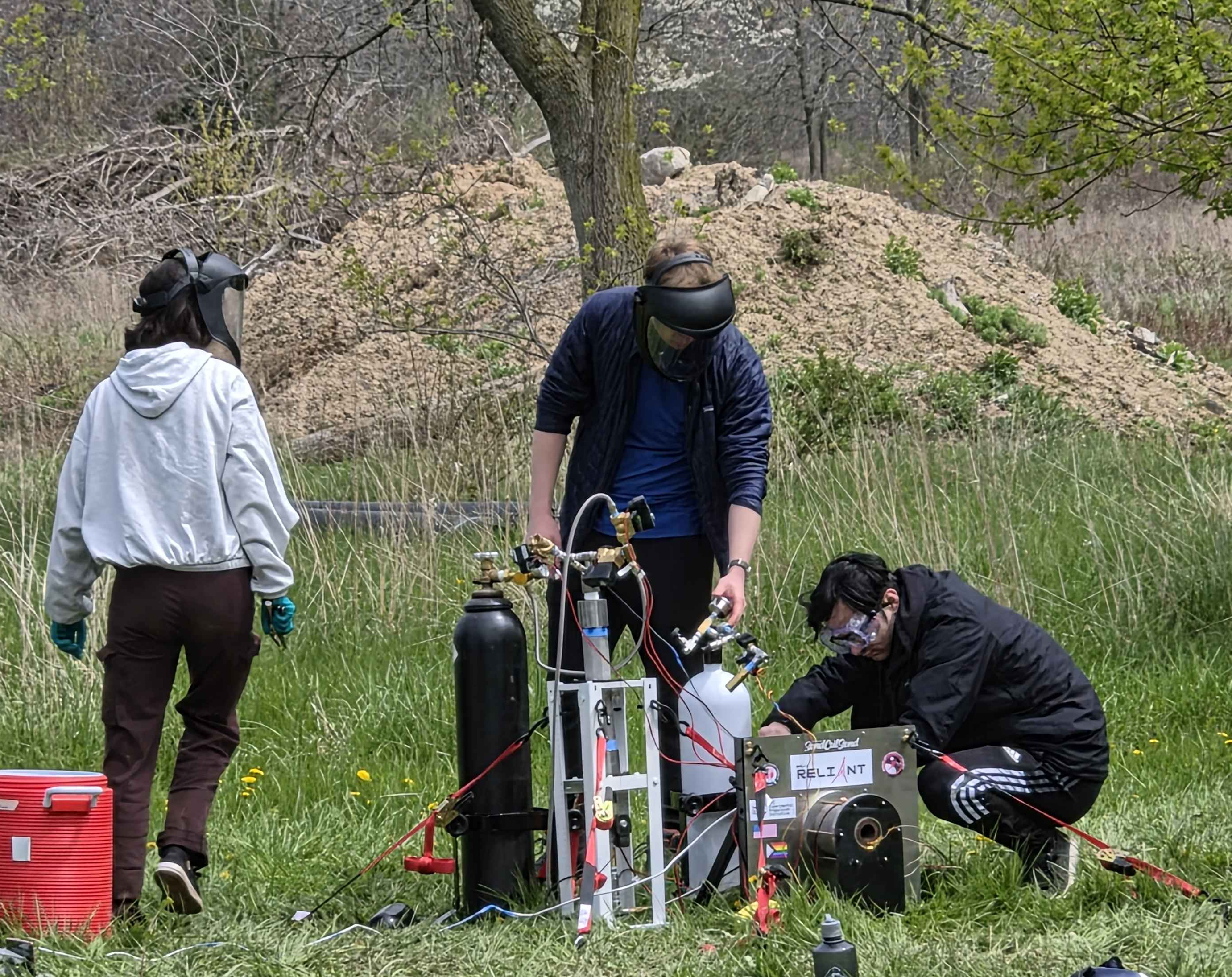
Static Fire Testing
Static Fire Testing
Prepping Tanks for Test
Nozzle wall temperature surface plot
Wall temperature at T+5s, MATLAB (matrix exponential solver)
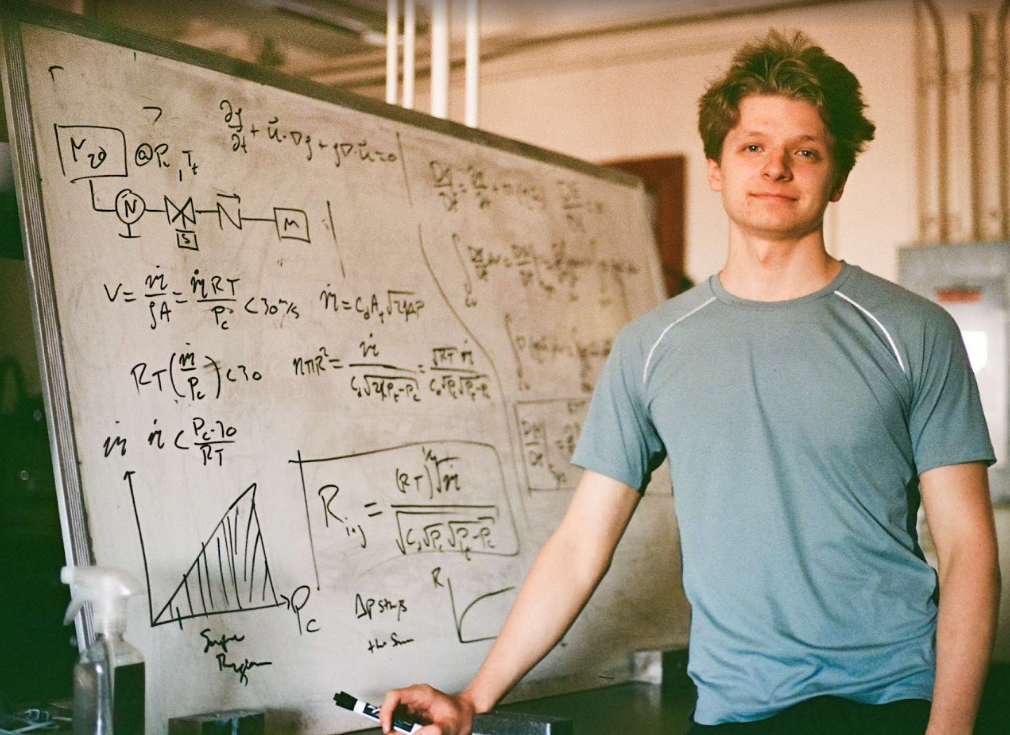
Whiteboard feed system design
Personal Project

Stardust - Personal Regen Liquid Rocket

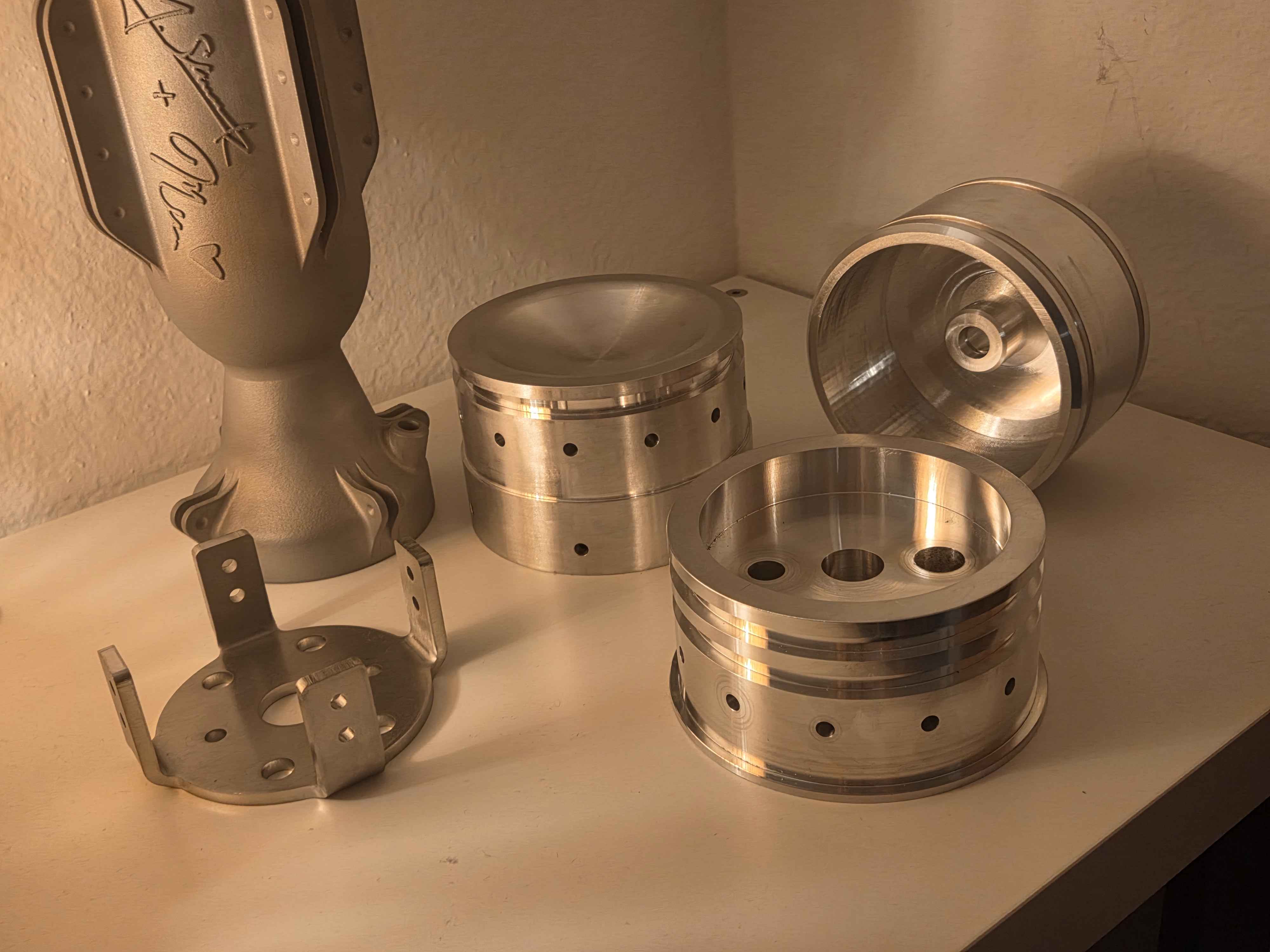
Stardust engine and propellant tank hardware
Engine and Propellant Tank Hardware

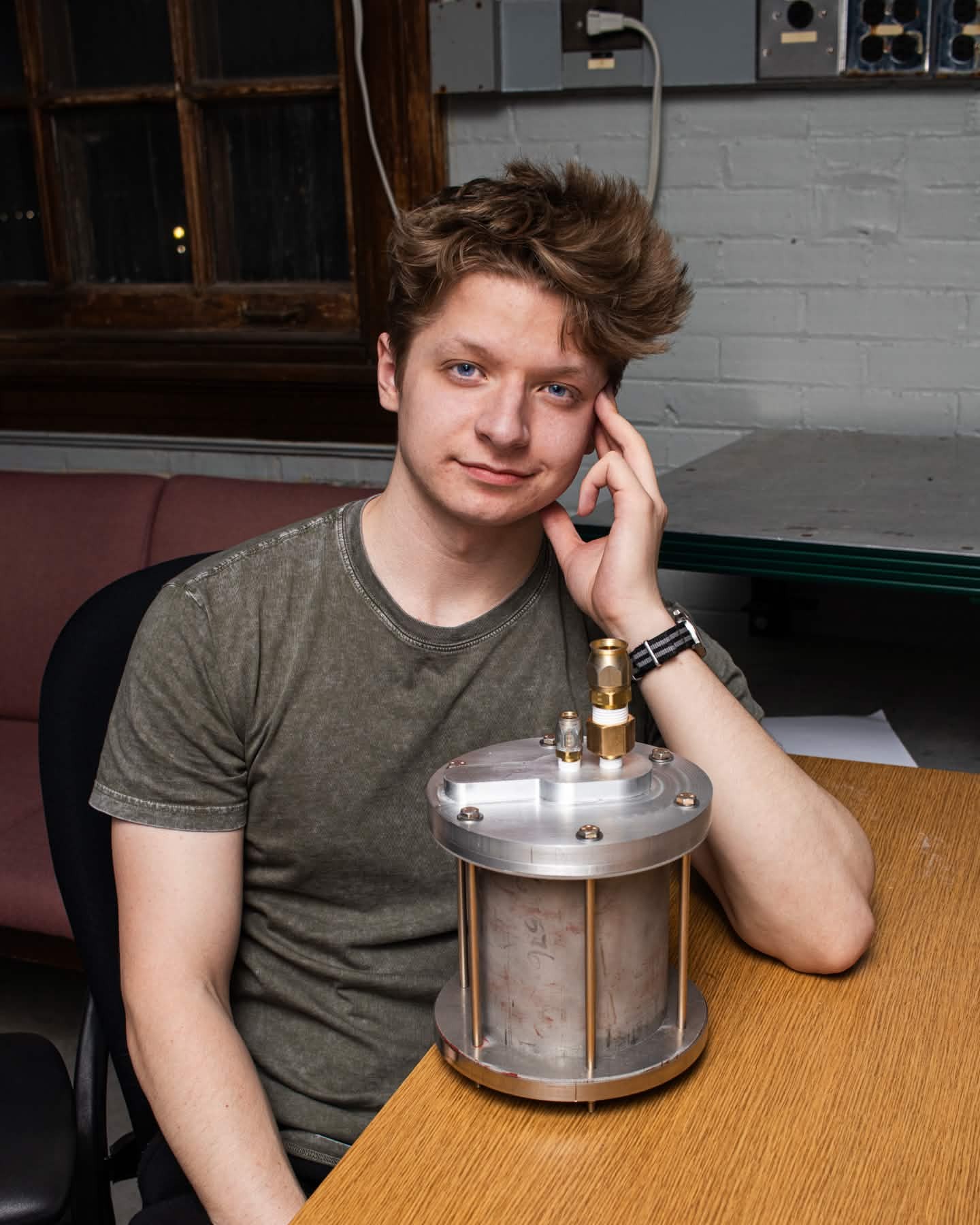
While I was in Long Beach during Summer 2026, I designed a regeneratively cooled printed rocket engine, high pressure propellant tanks, and main valves for Stardust.

I designed this rocket to gain practice designing fully integrated systems, keeping costs manageable for complex projects, and moving quick with design. Design went from idea to complete CAD and analysis in under 2 and a half months.

In the RPI machine shop, I am finishing fabrication of the necessary parts for a static fire. Hoping to fly Stardust to a projected 24,000 ft AGL in the Spring of next year.

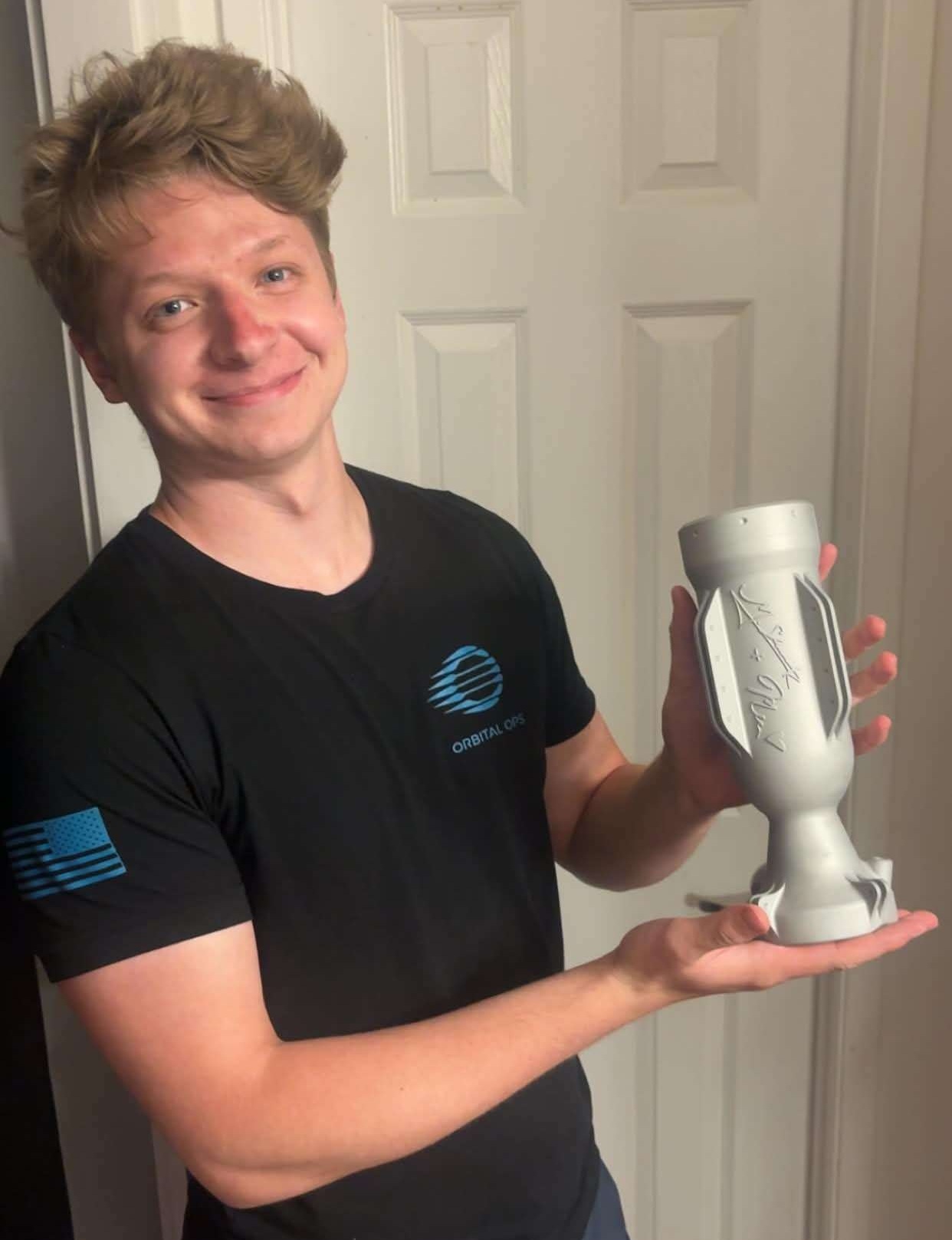
3D printed engine arrives
3D Printed Engine!
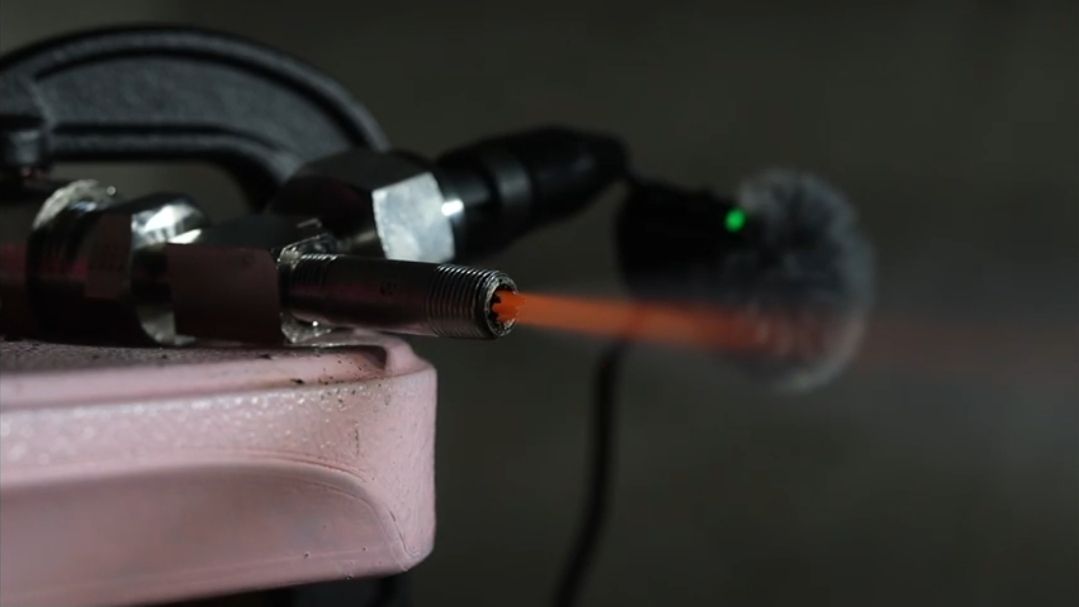
Igniter test
Engine Igniter Testing
RPI Design/Build/Fly — 2024–25

Load-Bearing Pylon Design for Competition Aircraft

Subsystems Lead
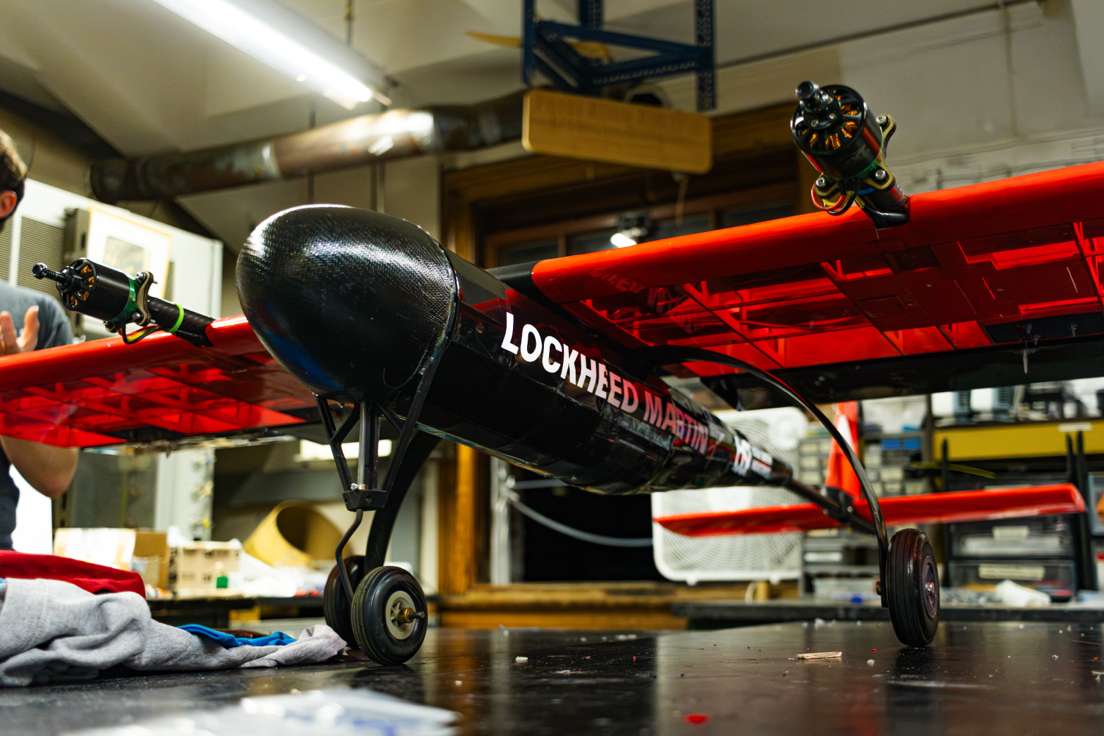
Competition aircraft in the lab
Competition plane 'Juggernaut' in the lab

As subsystems lead, I designed and optimized a set of load-bearing pylons to hold maximum payload while staying aerodynamic, with quick attach/release to the wing structure per the competition's scoring rules.

Used FEA, carbon fiber sheet composite, and deliberate 3D-print layer orientation to put strength exactly where it mattered. I also designed an embedded quick-release pin system.

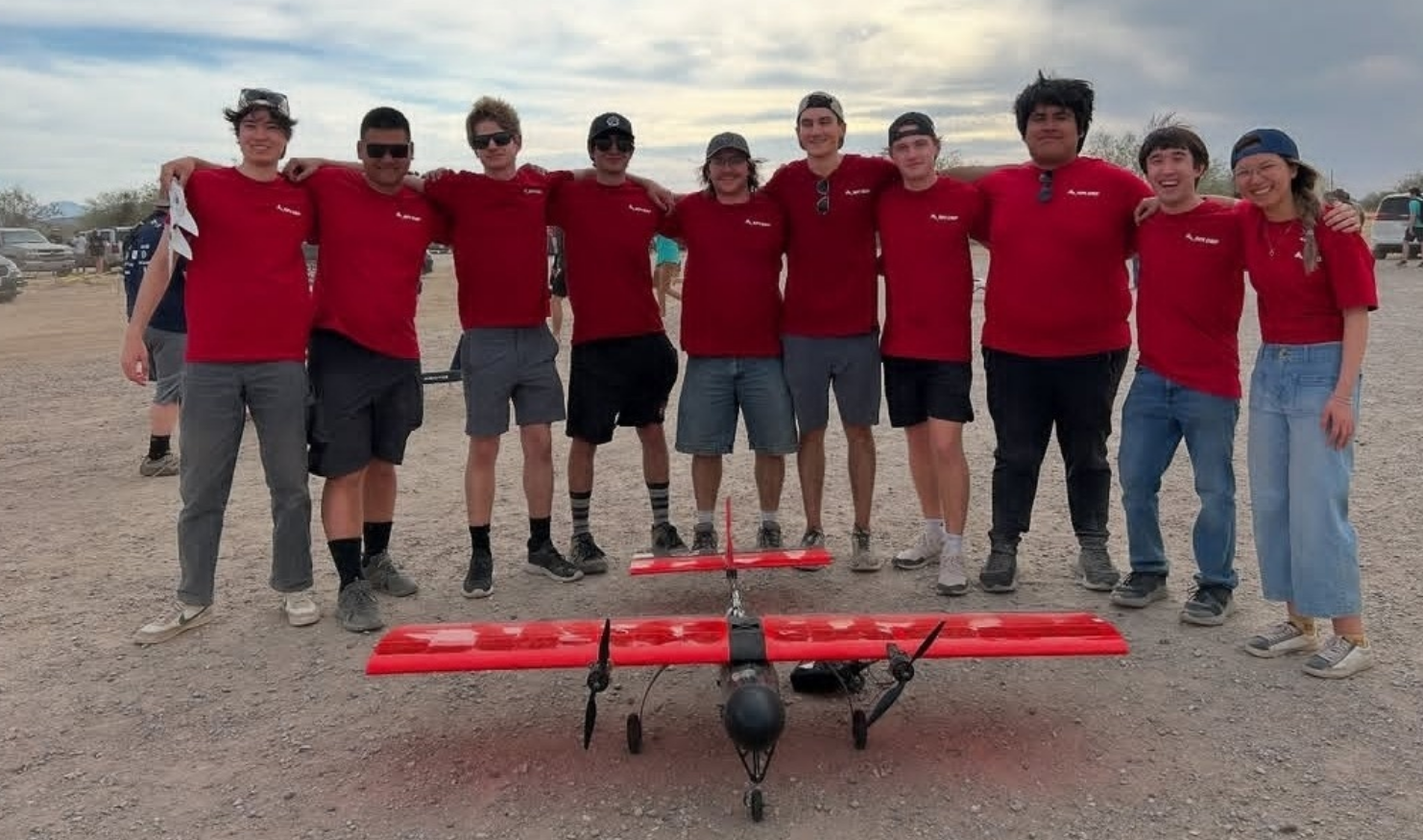
RPI DBF finished 5th place worldwide, out of 100+ teams. For the mission focused on the load bearing pylons, RPI scored second place.
FEA stress distribution on the pylon
Team leads after competition
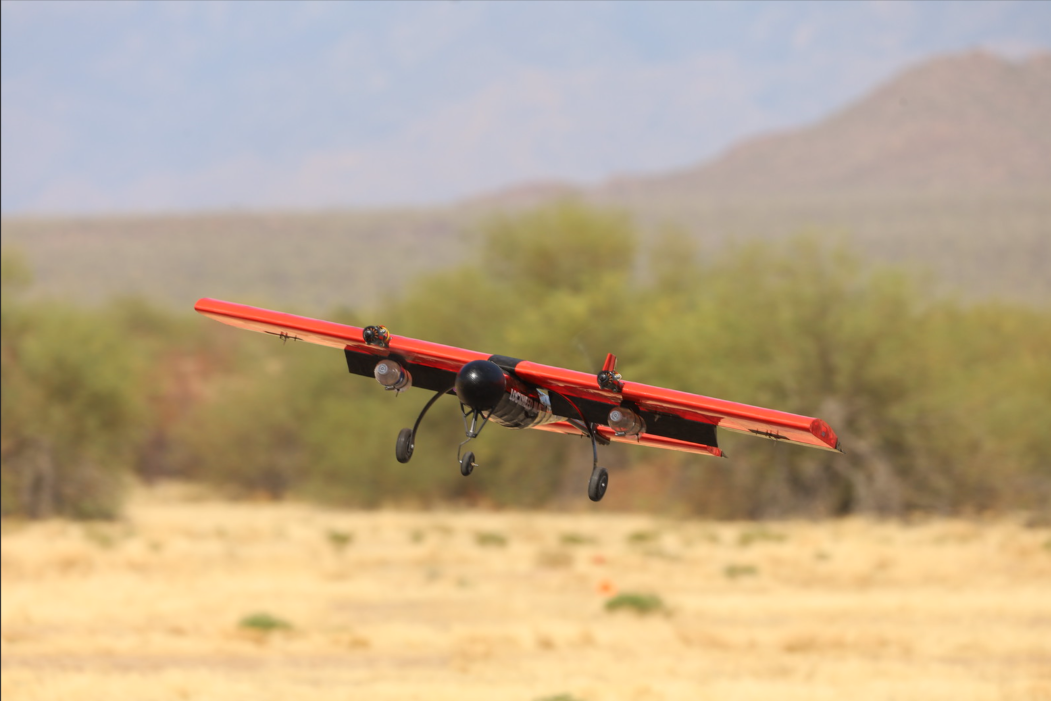
Aircraft in flight during competition
Juggernaut in flight, competition day
Spaceflight Mechanics — Final Project, Spring 2026

Optimal Cislunar Invariant Manifolds in the Circular Restricted Three-Body Problem

Author

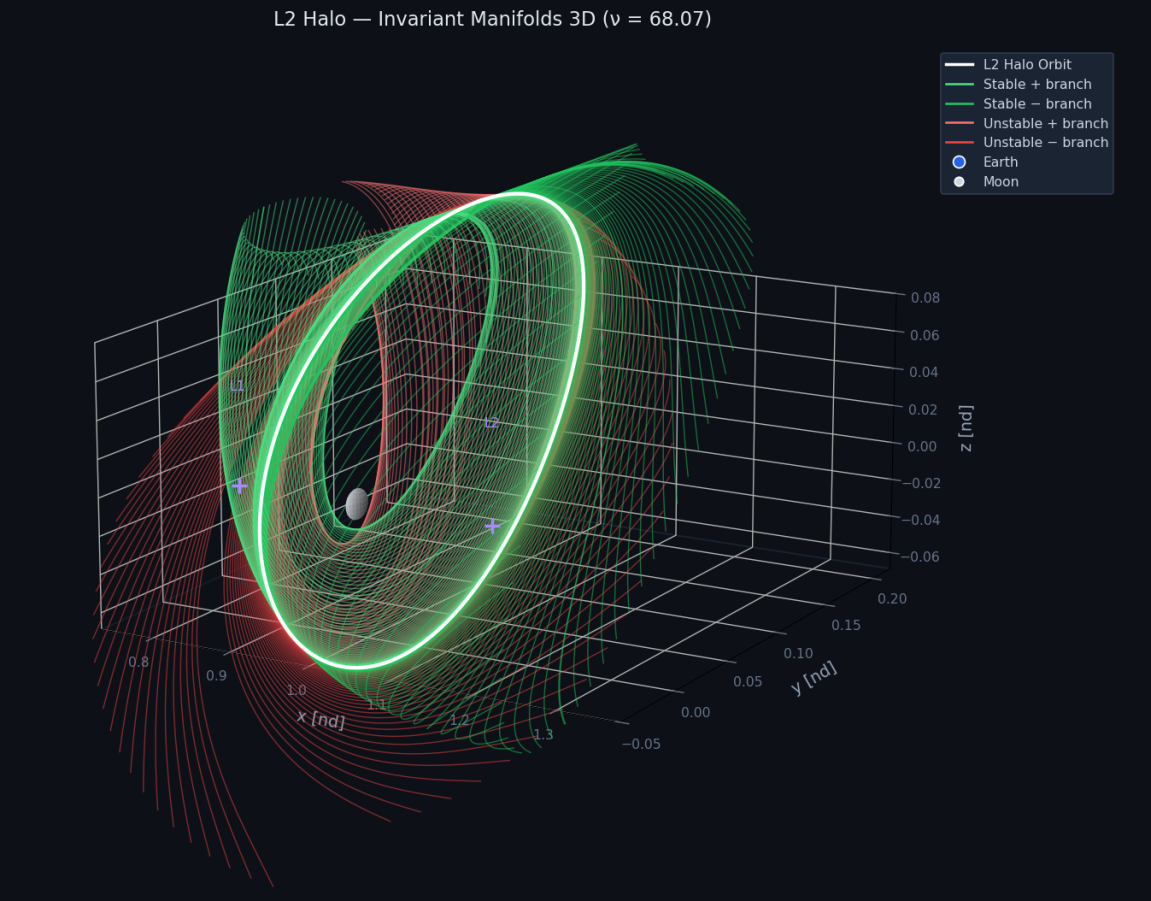
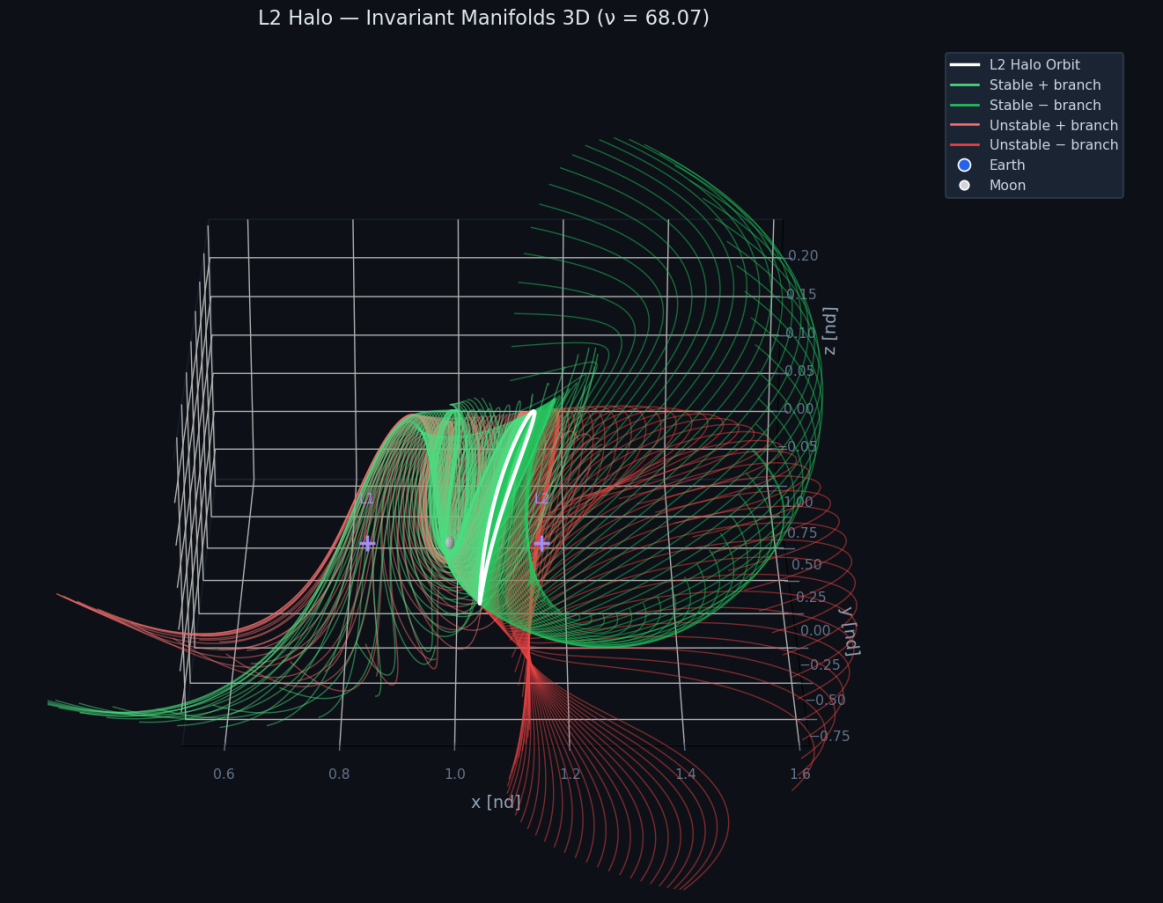
Libration point orbits in the Earth-Moon system make lunar surveying, communication, crew operations, and satellite constellations possible. Treating periodic orbits as hyperbolic fixed points in the CR3BP phase space, their stable and unstable invariant manifolds act as low-energy pathways a spacecraft can ride between orbits.

Using initial conditions from the JPL Three-Body Periodic Orbit Database, I propagated Halo, Dragonfly, and Axial orbits, integrated the state transition matrix over one period to form the Monodromy matrix, and pulled out its stable/unstable eigenvector pair. Perturbing along those eigenvectors at every point on the orbit and integrating forward and backward in time traces out the full manifold.

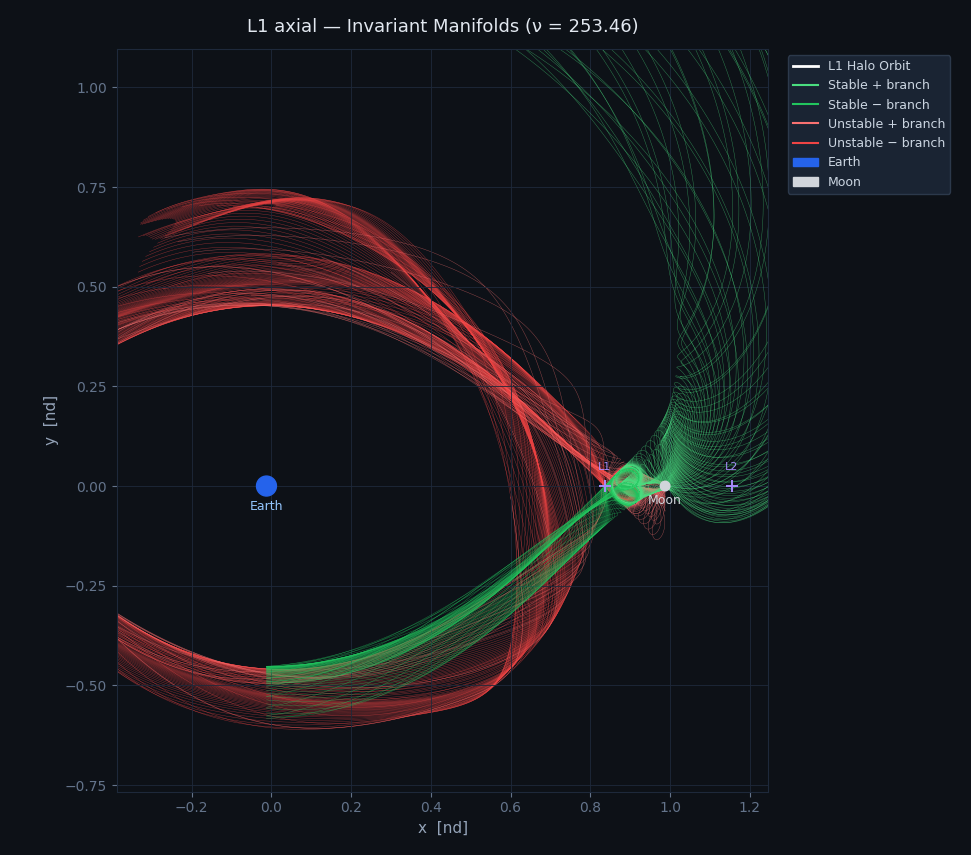
Everything was written in Python with an RK45 solver. Event functions in SciPy's solve_ivp locate "piercing points" where manifolds cross the Earth and Moon x–z planes. These points are filtered to find the best candidates for cislunar transfer orbit insertion.

Stable and unstable invariant manifolds of an L2 Halo orbit in 3D
Arrival/departure manifolds of an L2 Halo orbit
L2 Halo orbit invariant manifolds, alternate view
L2 Halo manifolds, alternate view
L1 Axial orbit manifolds with piercing points, 2D projection
L1 Axial manifolds with piercing points
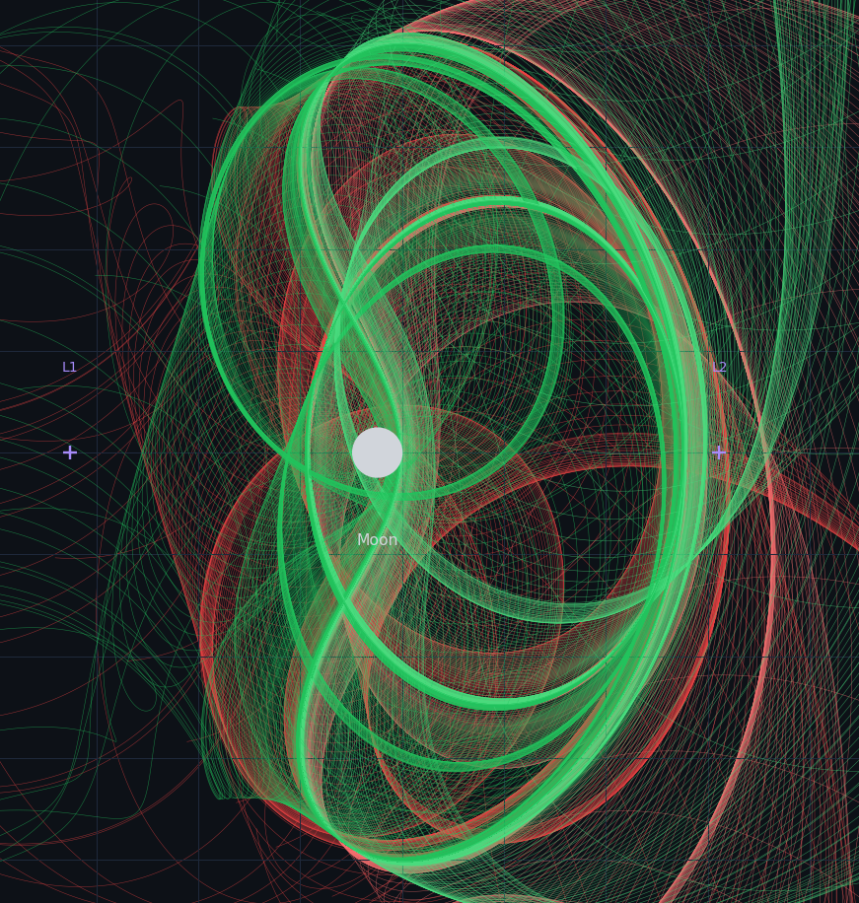
Dragonfly orbit manifolds around the Moon, zoomed 2D projection
Dragonfly orbit manifolds around the Moon